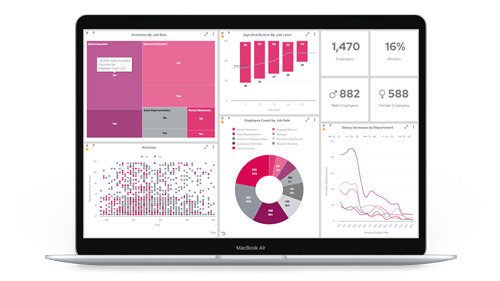




One of the most common reasons analytics initiatives underperform is not technology, data quality, or skills, it is language. Organisations routinely ask for dashboards when they actually need reports, and ask for reports when what they really want is the ability to explore and act on data. This creates misaligned expectations, rework for delivery teams, and analytics that fail to land. At Panintelligence, we are intentionally precise about terminology because clarity of language directly affects clarity of outcomes.
Why analytics terminology causes real problems
Analytics language has been shaped by legacy BI tools where almost everything was effectively a report, even when viewed on screen. As dashboards were layered on top, the terminology blurred further, leading to very real delivery and adoption issues, including
- Stakeholders requesting dashboards but expecting fixed, board ready outputs
- Delivery teams building interactive views that cannot be governed or repeated
- End users losing trust because numbers change between views
- Analytics teams rebuilding the same logic in multiple formats
- Slow decision making because insight is not presented in the right form
This is not a theoretical issue, it directly impacts trust, adoption, and value.
What we mean by a dashboard
In the Panintelligence context, a dashboard is designed for live decision making and ongoing use. Its defining characteristics are
- Purpose: insight, exploration, and action
- Usage: frequent, often daily or near real time
- Interaction: filtering, drilling, slicing, and comparison
- Audience: role based users embedded in their workflow
- Question type: what is happening now, where should I focus? what has changed.
Dashboards are not final artefacts. They evolve as questions evolve and are most effective when embedded directly into the systems where work happens.
What we mean by a report
A report serves a different but equally important purpose. Reports are built for consistency and assurance rather than exploration. Their defining characteristics are
- Purpose: communication, compliance, and accountability
- Usage: periodic or event driven
- Interaction: minimal or none
- Audience: boards, customers, regulators, and external stakeholders
- Question type: what happened, what must be submitted, what must be evidenced
Reports prioritise accuracy, repeatability, and version control because they often become formal records.
Insight vs hindsight: the simplest way to frame the difference
Another effective way to cut through analytics language confusion is to think in terms of insight and hindsight. Dashboards are about insight. They help users understand what is happening now, why it is happening, and what action to take while there is still time to influence outcomes. Reports are about hindsight. They explain what has already happened in a consistent, controlled way so numbers can be trusted, shared, and defended. Both are essential, but they answer fundamentally different business questions
- Insight asks what is changing and what action should we take
- Hindsight asks what happened and how do we explain it
- Insight supports decisions in the flow of work
- Hindsight supports assurance after the fact
When organisations confuse insight and hindsight, they either try to make decisions from static reports or attempt to govern decisions using exploratory dashboards, and neither approach works well.
Top 5 myths that blur dashboards and reports
Much of the confusion is reinforced by persistent misconceptions
- A PDF with charts is not a dashboard, regardless of how it looks
- Interactivity alone does not make something a dashboard if results cannot be governed
- Reports are not inferior to dashboards, they solve a different problem
- One analytics artefact cannot effectively serve every audience
- Visual appeal does not equal decision support
These myths cause organisations to force dashboards to behave like reports or reports to behave like dashboards, and both approaches fail.
Choosing the right tool for the job
A simple intent led lens removes most of the ambiguity
- Use a dashboard when the goal is insight, monitoring, and action
- Use a report when the goal is communication, submission, or assurance
- Use both when exploration and formal outputs are required from the same trusted data
Strong analytics strategies recognise that dashboards and reports coexist for a reason.
How Panintelligence approaches this differently
Many analytics platforms blur dashboards and reports into a single concept, which is where confusion starts. Panintelligence deliberately separates interactive dashboards from governed reporting while using a shared, trusted data layer underneath. This enables
- Embedded, self-service dashboards for confident exploration
- Automated, pixel-perfect reports for consistency and compliance
- Clear expectations for users, stakeholders, and delivery teams
- Faster adoption because analytics behave as people expect; the separation is intentional and removes ambiguity rather than adding to it.
A clearer rule of thumb for Dashboards vs Reports
If the question is what do I need to understand right now and what action should I take, think dashboard and insight.
If the question is what do I need to submit, share, or stand behind, think report and hindsight.
Many organisations discover they have been using the wrong tool for the job and paying for it through slow decisions and low adoption. Clarifying the language of analytics is often the fastest way to unlock better outcomes from data.