



Artificial intelligence is offering unprecedented opportunities for companies to enhance efficiency, improve customer experiences, and make data-driven decisions. However, the journey to successfully implementing AI can appear complex and requires a well-thought-out strategy.
In this blog post, we distill the key insights from our webinar on how to pilot AI successfully, providing a roadmap for businesses to navigate the adoption of AI technologies tailored to their unique needs and objectives. Whether you're a business leader looking to embark on an AI initiative or simply curious about the process, this blog offers valuable guidance on how to approach AI adoption strategically.
The webinar, packed with expert advice and practical tips, is now available on-demand for those who couldn't attend the live session. Watch it below!

Step-by-step guide to a successful AI pilot
1. Setting objectives
Begin by clearly defining what your business aims to achieve with AI implementation. Identify areas where AI can bring the most value, such as automating repetitive tasks, enhancing customer interactions, or enabling smarter data-driven decision-making. This step is foundational, ensuring the AI initiative addresses real business challenges or opportunities. Tailor your strategy to your industry’s needs and align it closely with your company’s overarching goals to lay the groundwork for measurable outcomes.
2. Selecting the right AI solution
Choosing the right AI solution is critical to the success of your pilot. Look for solutions that are scalable and flexible enough to grow with your business and compatible with your current technology stack to minimize integration challenges. Evaluate how well the solution can support your operational needs and adapt to future demands. Assess the AI provider's reputation for reliability, support, and innovation, as these factors significantly influence the long-term success of your AI initiatives. Conduct a cost-benefit analysis to ensure the solution aligns with your budget and expected ROI.
Consider Panintelligence’s PI Predict: This Causal AI-powered solution goes beyond predictions by providing explainable insights, addressing biases, and enhancing decision-making. Its low-code, easily integrated design ensures secure, efficient deployment. Panintelligence’s strong reputation for support further ensures a smooth implementatio
3. Building a skilled team
An effective AI implementation requires a balanced team of technical and domain experts. Technical experts, such as data scientists and AI engineers, bring the technical know-how, while domain experts ensure the AI addresses real business needs. Depending on your organization’s current capabilities, you may need to upskill existing staff, hire specialized talent, or partner with external consultants. Encourage cross-functional collaboration between AI experts and other departments to ensure seamless integration and alignment with your broader business strategy. This team collaboration will be key to identifying challenges early and optimizing the pilot’s performance.
4. Data strategy and model training
A robust data strategy is the foundation of any AI project. Define the type of data required, how it will be collected, and how to maintain its quality over time. High-quality data is far more valuable than large volumes of inconsistent or irrelevant data. Ensure compliance with data privacy laws and establish governance policies to secure sensitive information. Train your AI model using diverse and comprehensive datasets, refining it through multiple iterations to ensure it produces accurate, actionable outputs. Data scientists and AI experts should oversee this process to align the model’s functionality with business objectives.
5. Integrating AI
Once the AI model is trained, integrate it into your business operations in a way that minimizes disruption. Update workflows, adjust existing systems, and provide training to ensure employees are prepared to work alongside the AI. Engage stakeholders early and communicate the benefits of the new system to foster buy-in and reduce resistance. Address cultural shifts by preparing your team for changes in decision-making processes and helping them understand how AI will enhance their roles rather than replace them. Successful integration requires a combination of technical adjustments and change management.
6. Continuous monitoring and enhancement
AI implementation doesn’t end with integration. Regularly monitor the system’s performance using clear, predefined metrics tied to your business goals. Evaluate whether the AI is delivering the expected outcomes and identify areas for improvement. Continuously update and refine the model to adapt to changing business needs, emerging technologies, or new data insights. Create feedback loops to address issues quickly and involve key stakeholders in periodic reviews to ensure the AI system remains effective, relevant, and aligned with your business strategy over the long term.
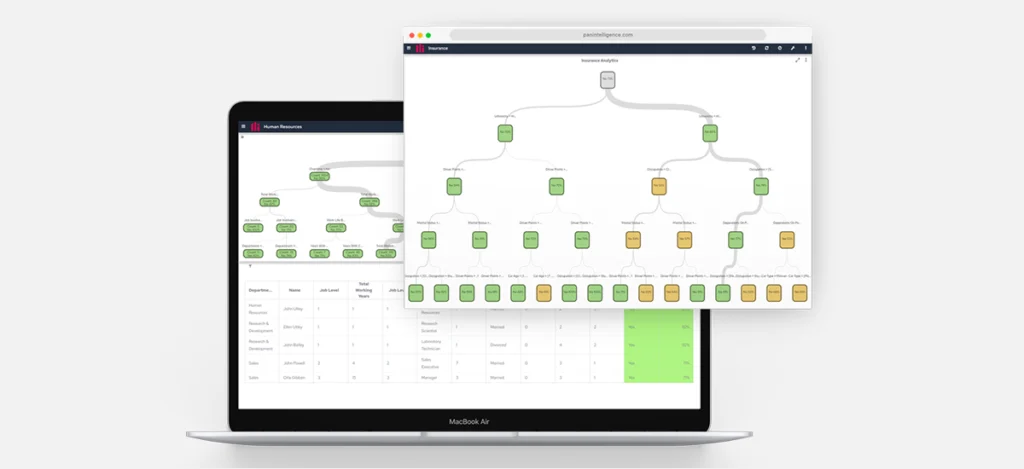
Panintelligence Causal AI model example
Tailoring AI solutions to your business: Use cases
Choosing the right AI solution requires a deep understanding of your industry’s specific needs and challenges. To tailor AI effectively, businesses should:
- Assess industry needs: Identify key areas where AI can offer a competitive advantage.
- Engage with industry experts: Collaborate with AI specialists who understand your sector's nuances.
- Evaluate AI providers: Compare AI solutions based on scalability, integration capabilities, and proven success in your industry.
| Industry | AI Solution | Benefits |
|---|---|---|
| Healthcare | Predictive analytics | Improved diagnostics |
| Retail | Customer personalization | Enhanced shopping experience |
| Finance | Fraud detection | Increased security |
By understanding and addressing these industry-specific needs, businesses can implement AI solutions that not only meet their immediate requirements but also provide sustainable growth and innovation.
Key takeaways
- A strategic approach to AI implementation starts with identifying specific business needs and objectives.
- Selecting the right AI solution and building a skilled team are critical for the success of an AI pilot.
- A comprehensive data strategy is essential for training reliable AI models and integrating them into business operations.
- Continuous monitoring and enhancement of AI systems are necessary to maintain relevance and achieve business goals.
AI requires ongoing enhancement to stay relevant. As the business evolves, the AI model should be updated, and businesses should stay informed about AI advancements that could benefit their operations. Regular reassessment of the data strategy and AI solutions is necessary to ensure the business remains at the forefront of innovation and maintains a competitive edge.