



Most firms underestimate how much FCA data compliance risk is hiding inside their data. You may believe your organisation has manageable challenges with fragmented systems, inconsistent definitions, or siloed reporting. What you may not have acknowledged is that these weaknesses are no longer operational flaws. They are regulatory exposures. The FCA’s 2025 to 2030 Strategy is explicit that poor data quality, inconsistent MI, and inadequate governance continue to drive consumer harm and supervisory intervention. If your organisation cannot evidence customer outcomes quickly, consistently, and reliably, you are already out of alignment. Fragmented data is not slowing you down. It is placing you in the path of FCA regulatory scrutiny.
Legacy Architecture Was Never Designed for Regulatory Accountability
Most legacy systems in UK financial services were built to process transactions, not to justify decisions, trace lineage, or evidence fairness. They were created long before Consumer Duty, outcome testing, or real time scrutiny. They operate on different logic, hold different definitions, and store inconsistent versions of the same customer story. The FCA’s retail banking portfolio letter highlights systemic weaknesses in the sector, including inconsistent data definitions, unreliable MI, and insufficient oversight of customer outcomes. If your organisation mirrors these characteristics, your legacy systems' compliance risk exposure is not hypothetical. It is structurally embedded in your architecture.
The Data That Should Concern You in FCA Data Compliance
The Bank of England and FCA’s 2024 AI Survey reveals a sector struggling with transparency and control. It reports that 75 percent of firms already use AI and a further 10 percent plan to adopt it within three years, yet only 34 percent say they fully understand the AI systems they rely on. If your organisation sits within the majority that does not fully understand its own decisioning systems, your fragmented data landscape is not just a technical burden. It is a regulatory liability. Meanwhile, the FCA opened around 2,700 enforcement cases in 2024 to 2025, many relating to governance failures, poor controls, and inadequate information. Source: https://www.fca.org.uk/data/fca-operating-service-metrics-2024-25/enforcement-data. You do not need to guess what draws regulatory attention. It is always the same root cause. Firms that cannot produce reliable evidence and maintain strong FCA data compliance.
The Hidden Cost You Continue to Ignore
You may believe your organisation can manage the complexity. Analysts reconcile data manually. MI teams cleanse inconsistencies. Committees review dashboards with caveats. But this coping mechanism creates fragmented data risk, not resilience. Manual reconciliation introduces error. Conflicting system definitions undermine governance. Reported outcomes vary by source. Forecasts shift depending on the dataset used. These flaws erode your organisation’s credibility the moment the FCA asks for evidence. The regulator’s business plans repeatedly emphasise the need for firms to demonstrate how they identify foreseeable harm, monitor consumers effectively, and maintain reliable MI. These expectations cannot be met by stitching fragmented systems together at month end.
A Diagnostic You Cannot Ignore for FCA Data Compliance
If you cannot answer all five of the following questions instantly and confidently, your data is already creating FCA data compliance risk.
- How many definitions of a vulnerable customer are in use across your organisation.
- Can you trace the lineage of every field feeding your affordability or outcome monitoring processes.
- Do all teams use the same definition of good, poor, and foreseeable harm outcomes.
- Can you produce regulator-ready MI without any manual reconciliation.
- Can you reconcile customer journeys across branch, online, CRM, and decisioning systems consistently.
If you hesitated, your data is in control of your regulatory exposure. Not you.
Where Fragmented Data Creates Direct Regulatory Exposure
Fragmented data compromises every key FCA expectation. It prevents you from monitoring outcomes reliably. It makes treatment of vulnerable customers inconsistent. It weakens your ability to demonstrate how you identify foreseeable harm. It produces MI that fails to reflect the true customer experience. It undermines your ability to justify affordability assessments. It slows your response to supervisory queries. These are all areas highlighted repeatedly in FCA strategy, business plans, and portfolio letters. The regulator does not accept legacy system complexity as justification. The FCA expects firms to invest in data capability equal to the demands of modern regulation and legacy systems compliance standards.
The Implication of Doing Nothing About FCA Data Compliance
If your organisation does not address fragmented data, the risk does not remain static. It increases. Supervisory queries will take longer to answer. MI quality will deteriorate as business complexity grows. Inconsistent definitions will create false assurance. Vulnerable customer analysis will become unreliable. Your evidence base for Consumer Duty will weaken. And eventually the regulator will intervene because your organisation cannot evidence outcomes accurately. Inaction is not a delay tactic. It is a strategic decision to absorb growing regulatory risk.
What Good Actually Looks Like
A compliant data landscape is unified, governed, and transparent. It uses one set of definitions across every system and process. It tracks lineage from source to output so every figure can be justified. It eliminates manual reconciliation. It enables reproducible outcome testing. It provides real time MI that stands up to scrutiny. This level of discipline is not a technology choice. It is a regulatory necessity.
Where Panintelligence Eliminates the FCA Data Compliance Problems Entirely
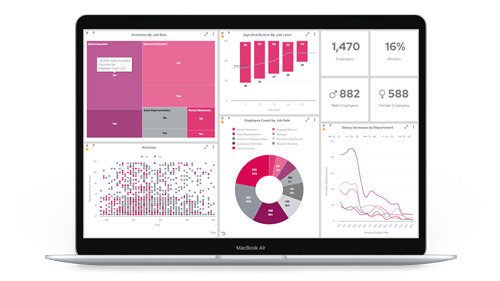
Panintelligence provides the capability your legacy architecture cannot. It unifies fragmented datasets into a single governed analytics layer. It enforces consistent definitions so reports, models, and decisions draw from the same truth. It captures data lineage automatically so every transformation is visible. It eliminates spreadsheet reconciliation by validating data in real time. It generates consistent, regulator-ready MI instantly. And it overlays these capabilities onto your existing architecture without requiring replacement of underlying systems. The result is simple. Unified data that strengthens governance, accelerates reporting, supports decisioning, and reduces regulatory exposure.
If Your Data Cannot Agree, Your Regulators Will Not Believe You
The FCA does not judge intentions. It judges evidence. If your data produces conflicting narratives, inconsistent outcomes, or explanations that require reconstruction, the regulator will assume your controls are ineffective. Fragmented data is not an IT inconvenience. It is a governance failure. Unified data creates credibility. Fragmented data creates exposure. Panintelligence gives you the ability to produce consistent, defensible, regulator-ready evidence long before your next supervisory challenge.