



What are data insights?
Simply put, data insights are the valuable pieces of knowledge we extract from different types of data. These insights guide decision-making, helping businesses improve operations, innovate products, and build better strategies. Think of it as taking information and transforming it into an actionable strategy.
What's the difference between data, insights, and analytics?
To understand data insights better, let’s clarify how they differ from data and analytics.
What is data?
Data is like the building blocks - it’s the raw facts and figures, like numbers, symbols, or words, that describe a situation. It can be messy and unstructured at first, often stored electronically. For it to be useful, it needs to go through a process called data integration, where it’s cleaned up and organized into something that businesses can actually use.
What are insights?
Insights are those "lightbulb moments" when you uncover something unexpected or meaningful in your data. It goes beyond just understanding the numbers—it's about recognizing patterns or connections that weren’t immediately obvious.
What is analytics?
Analytics is the toolkit that helps you organize, examine, and make sense of your data. By using data analytics, you can uncover trends, patterns, and correlations that answer key questions and even spark new ones.
What are the differences:
Reducing it down to simple terms makes the difference between data, insights, and analytics clear:
Data = The raw materials
Insights = The meaningful discoveries
Analytics = The tools and processes for finding those insights

Raw data is collected and organized, analytics processes this data to uncover patterns and trends, and insights emerge, guiding strategic decisions and actions.
Why are data insights so valuable?
A 2023 survey found that 91.9% of organizations achieved measurable value from data and analytics investments in 2023. How? Because insights drawn from data allow businesses to:
- Spot trends and patterns
- Make accurate forecasts
- Gain a competitive edge
For example, if a company wants to boost sales by encouraging repeat customers, it can analyze buying behaviors. By understanding things like purchase history and seasonal trends, the business can adjust its strategy to better meet customer needs. This leads to higher satisfaction, loyalty, and, of course, more sales.
Examples of how to generate insights from data
Having understood what data insights are, their significance, and their potential impact on your organization, you might be curious how they can be useful in real-world situations. Here are some examples:
Improving customer support efficiency
- Data: Customers frequently complain about long hold times when calling customer support, averaging over 15 minutes.
- Data insight: To improve customer satisfaction, you implement a callback feature and invest in hiring more support agents during peak hours.
Maximizing product launch impact
- Data: The highest volume of website traffic occurs during the first three days of a new product launch.
- Data insight: You allocate additional resources to ensure website stability and increase promotional activities during these critical days to maximize sales.
Boosting retention rates
- Data: Customer group X has a 20% higher retention rate compared to customer group Y over six months.
- Data Insight: You explore the reasons behind group X's loyalty and design targeted retention strategies for group Y, such as loyalty rewards or exclusive content.
Enhancing social media engagement
- Data: Social media posts with video content generate twice as many shares as those with static images.
- Data insight: You prioritize video production for future campaigns to enhance engagement and reach.
Driving long-term revenue growth
- Data: A discount offered for annual subscriptions results in a 30% increase in customer sign-ups compared to monthly plans.
- Data insight: You focus on promoting annual plans with strategic discounts in upcoming marketing efforts to boost long-term revenue.
How to get data insights: A step-by-step guide
The journey to actionable insights starts with a clear plan and involves several key steps, from defining goals to exploring the data. Here's how it typically unfolds:
1. Define business goals
The process begins with stakeholders setting clear, measurable objectives. These might include improving production methods or pinpointing the most effective marketing strategies, as mentioned in the earlier example. Having a clear focus ensures the insights are aligned with business needs.
2. Gather data
If systems for collecting and storing raw data are already in place, great! If not, the organization needs to establish a structured process to ensure reliable data collection. This step sets the foundation for meaningful analysis.
3. Integrate and manage data
Raw data often needs cleaning and organizing before it’s ready for analysis. This involves processes like data replication, ingestion, and transformation, which merge different data types into standardized formats. These cleaned datasets are then stored in repositories such as data lakes or data warehouses for easy access.
4. Explore the data
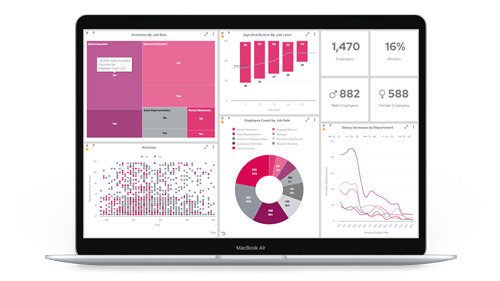
Using analytics platforms or business intelligence (BI) tools, users can dive into the data to uncover insights that answer specific questions. These tools often include dashboards and reporting features to present findings clearly and effectively.
Many modern tools also offer self-service analytics, empowering non-technical users to explore and analyze data without requiring coding skills. This increases data literacy and makes data insights accessible to more people across the organization.
Panintelligence simplifies data exploration with a user-friendly, embedded analytics tool that makes insights accessible to everyone, regardless of technical skill. With real-time dashboards and secure reporting, it integrates seamlessly into workflows, empowering smarter, faster decision-making.
Key Takeaways: Ensuring reliable data insights
- Insights drive decisions: Reliable insights are essential for informed decision-making and effective strategies. Missteps often stem from errors in interpretation, not just inaccurate data.
- From data to action: Data represents raw information, analytics processes it, and insights turn it into actionable knowledge that delivers value.
- Steps to reliability: Successful insights depend on clear goals, quality data collection, effective management, and tools that make exploration and analysis accessible.
- Avoiding pitfalls: Human error and misinterpretation are common challenges. Investing in data literacy and user-friendly tools can help ensure the trustworthiness of insights.
By following these principles, organizations can transform data into meaningful insights that support strategic growth.