



We all say it: “We want to be a data-driven organisation.”
It’s become a strategic north star for countless businesses. But for many, that aspiration quietly unravels after implementation.
Not because the data’s wrong. Not because the dashboards are poorly designed. But because the people they’re built for -the users -simply don’t engage with them.
The reason? Adoption is where most data strategies fall down.
And without adoption, your BI project is just shelfware.
Data Doesn’t Drive Decisions -People Do
Even the best BI tools can become irrelevant if they don’t fit into real workflows. If users need to raise a ticket, wait for a developer, or second-guess the numbers -they’ll resort to what they trust: spreadsheets, gut instinct, or siloed workarounds.
Self-service and security are no longer optional -they’re the foundation for adoption.
According to Gartner’s 2024 Analytics Adoption Report, over 70% of BI investments still fail to meet their goals. The primary reasons? Tools are either too complex, too centralised, or too disconnected from how people actually work.
The Two Pillars of BI Adoption: Self-Service and Security
You can’t force adoption. But you can design for it. And the two most critical levers are:
1. Self-Service That Doesn’t Compromise Control
Self-service analytics means users can explore data, filter it, and ask questions -without needing technical support or risking data chaos.
But too often, “self-service” translates into loose governance or bloated interfaces.
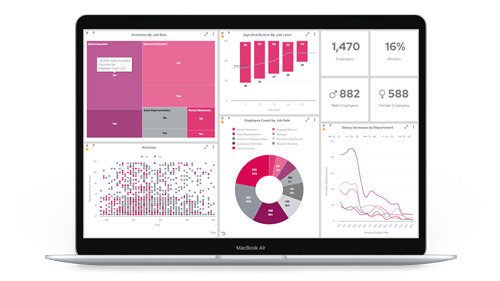
At Panintelligence, self-service is embedded directly into the dashboard experience, with:
- No-code interactions, accessible to non-technical users
- Pre-configured, role-based views for clarity and relevance
- Drill-downs and filtering that respect governance boundaries
- Machine learning workflows that feel like part of the dashboard -not a separate system
We’ve seen organisations improve report turnaround times by over 60%, simply by putting insight back in the hands of the people who need it.
2. Security That’s Invisible, But Inflexible
User trust hinges on consistent, secure, and governed data. When different teams see different numbers -or access data they shouldn’t -trust evaporates.
We built Panintelligence with multi-tenant, role-based access control at its core. That means:
- Row-level security ensures users only see the data they’re authorised to
- SSO and audit logs support enterprise-grade compliance
- Tenant-aware design scales from single-site operations to global SaaS platforms
- Built-in governance provides a single source of truth, not competing reports
In regulated industries, it’s the difference between insight and exposure.
If Your BI Isn’t Secure or Self-Serve, It Won’t Get Used
When users are confident in the numbers, feel empowered to explore, and can do so without barriers -that’s when BI starts to earn its place in daily decision-making.
We’ve helped teams across fintech, healthcare, aviation, and compliance move from static, centralised reporting to secure, scalable self-service dashboards embedded directly into their operations.
And we’ve done it without sacrificing data integrity or governance.
Let’s Build BI That People Actually Use
If your team is still emailing spreadsheets, raising tickets for basic reports, or quietly ignoring your analytics platform -it’s not a user issue. It’s a system design issue.
The best data strategy is one people want to engage with.
It’s fast, flexible, secure -and puts insight where it matters.
That’s how you go from dashboards to decisions.
If you’re ready to rethink what adoption looks like in your organisation, we’d love to show you how Panintelligence can help.