



If you are treating compliance data as something you tidy up for the regulator rather than something you exploit for competitive advantage, you are already losing ground to firms who are not. Your organisation is generating insights that most businesses pay consultants to uncover, yet you are ignoring them because you believe they belong to compliance. They do not. They belong to your commercial strategy. The FCA has been explicit in its Consumer Duty Data and Insights review that firms must understand customer behaviour and outcomes across the entire journey. If you are only using this data to satisfy a regulatory requirement, you are failing to use the single most powerful dataset you own. Your regulator is using your data to understand your business. If you are not doing the same, you are already behind.
Regulatory Data Sees What Your Commercial Dashboards Never Will
Compliance datasets see every place your business breaks. They reveal dropout, friction, errors, slow processing, misaligned incentives, mispriced products, and cohorts who are being lost long before the P&L tells you anything is wrong. Your outcome monitoring captures where harm builds. Your vulnerable customer processes show where support is insufficient. Your affordability logs show where customers abandon journeys. Your remediation cases show which products fall short of expectations. You already have commercial insight most businesses only discover after revenue declines or churn spikes. The FCA notes in its Strategy 2025 to 2030 that it will significantly expand its use of analytics to detect firms whose actual outcomes do not match their claims. The regulator can see the reality of your business performance faster than your executive team can. That is the level of intelligence compliance data already contains. And if you have not realised that yet, you have misunderstood what your own organisation is capable of.
The Commercial Opportunity You Are Leaving on the Table
The Bank of England’s 2024 AI in Financial Services Survey shows that only 34 percent of firms fully understand the systems they rely on. This lack of understanding is not just a risk exposure. It is a commercial blind spot. Your affordability models show who converts and who does not. Your vulnerability data shows who requires additional support and who behaves predictably. Your complaints logs show the failure points in your journey. Your Consumer Duty outcomes show where good customers generate poor experiences. You could build an entire growth strategy using nothing more than the data you are already required to collect. Yet most firms still believe compliance data cannot be trusted, cannot be used commercially, and cannot be integrated into product strategy. That belief is not only wrong. It is strategically self sabotaging.
What You Are Getting Wrong About Compliance Data
There are three fundamental errors leaders make. You assume regulatory data is backward looking, even though it exposes patterns months earlier than commercial MI. You assume compliance data is too messy to use commercially, when in reality the mess is caused by your lack of governance, not the data itself. And you assume insight teams need separate datasets to produce commercial analysis, even though the richest commercial signals sit inside regulatory datasets you are currently ignoring. Every one of these assumptions is holding your business back. You already own behavioural intelligence your competitors would pay to access, yet you are letting it sit unused because you have confined it to the compliance silo.
The Real Problem: You Do Not Trust Your Own Data
If you are not using compliance data commercially, it is not because the data lacks value. It is because you know the quality is inconsistent. Your definitions differ by system. Your lineage is incomplete. Your vulnerability flags are applied inconsistently. Your affordability metrics rely on patchwork logic. Your outcome monitoring results differ depending on which team produced the report. The FCA’s 2025 Retail Banking Portfolio Letter makes clear that inconsistent definitions and unreliable MI remain systemic weaknesses across UK financial services. If you cannot trust your regulatory data, you will never use it to drive commercial strategy. And if you cannot trust your data, you cannot trust your own view of your business.
The Diagnostic That Reveals Your Blind Spots
Answer these questions honestly. Can you track the commercial value of customers who produce good outcomes versus those who do not. Can you see exactly where friction in the journey creates foreseeable harm and commercial dropout at the same time. Can you predict revenue using the same datasets you use to evidence compliance. Can you reconcile affordability patterns, vulnerability indicators, and product usage across your systems without manual interpretation. If the answer to any of these questions is no, then your business is running with a blind spot your regulator can already see. You are generating signals daily. You are simply failing to use them.
The Consequence of Treating Compliance as a Firewall
If you treat compliance as protection rather than intelligence, you are guaranteeing that your organisation will continue to make avoidable mistakes. You will lose customers for reasons you could have foreseen. You will fix processes only after harm occurs. You will redesign products only after value leaks. You will operate with slower insight than your regulator. And you will make strategic decisions without the most accurate behavioural data available. The FCA has already confirmed it will increase the use of data and analytics to detect firms whose stated outcomes diverge from actual outcomes. Source: https://www.fca.org.uk/publication/corporate/our-strategy-2025-30.pdf. The message is clear. If the regulator is using your data more intelligently than you are, you are at a competitive disadvantage and a compliance risk simultaneously.
How to Turn Compliance Data Into a Commercial Engine
You must stop treating compliance data as a resource for avoiding penalties and start treating it as a resource for driving growth. To do this, you need three things. You need a single version of the truth so your regulatory and commercial teams stop using different datasets to answer the same questions. You need reproducible metrics so your insight is consistent regardless of who produces it. You need real time visibility into the behaviour patterns that drive both harm and value. When these are in place, compliance data becomes commercial intelligence instantly. You can identify profitable but underserved segments. You can see where product friction destroys retention. You can use outcome monitoring to predict churn. You can use affordability analysis to refine pricing. You can use vulnerability data to design better journeys. Every dataset you use for compliance can be used to grow your business. The only question is whether you choose to.
Where Panintelligence Unlocks the Value You Are Leaving Untapped
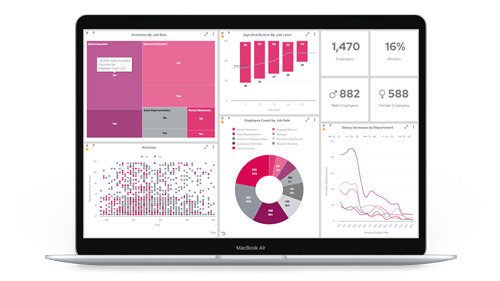
Panintelligence does not just unify your regulatory data. It reveals the commercial intelligence inside it. It creates the single governed evidence layer your business should have had years ago. It aligns definitions across compliance, commercial, product, and risk teams so insight becomes consistent and defensible. It gives you full lineage so you can trust how every metric was generated. It makes your outcome testing reproducible so your product and commercial decisions are based on evidence, not instinct. It brings real time visibility to behavioural signals that were previously buried inside fragmented systems. Panintelligence gives you the intelligence that determines how your business grows, how your products compete, and how your customers stay.
Your Competitors Will Not Beat You With Better Products. They Will Beat You With Better Evidence.
Your regulator is using your data to understand your business. If you are not doing the same, you have already fallen behind. Compliance data is not a burden. It is the clearest, fastest, and most valuable source of commercial intelligence you own. You already have the insight. You simply have not unlocked it. Panintelligence enables you to do exactly that. The firms that win will be the firms that treat evidence as strategy. The firms that lose will be the firms who continue treating compliance as paperwork. The choice is yours.