



The Era of Slow Reporting Is Ending
Most banks still operate as if supervision happens on a timetable. They prepare quarterly reports, respond to periodic FCA requests, and believe they have time to investigate, reconcile, and explain anomalies before a supervisor presses for answers. That mindset is now a liability. The FCA’s Data First Strategy and the broader transformation of regulatory reporting indicate a fundamental redesign of supervision. The FCA is moving away from retrospective oversight towards live, data driven supervision that mirrors how financial services actually operate. Payments move in real time. Fraud occurs in real time. Vulnerability emerges in real time. Yet most compliance processes remain stuck in the cadence of a 1990s reporting cycle. The FCA is preparing to close that gap. Its strategy for 2025 to 2030, makes clear that the supervisor aims to use data to detect harm earlier, intervene faster, and assess firms continuously. Whether banks are ready or not, real time supervision is becoming the new standard.
Why Real-Time Supervision Has Become Necessary
The financial sector is too complex, too interconnected, and too technologically driven to be supervised retrospectively. The FCA’s own analysis repeatedly highlights that harm is often detected long after it has occurred because firms take too long to produce evidence or because their data is too fragmented to provide a timely view of customer outcomes. The FCA’s Consumer Duty focus areas emphasise that firms must monitor outcomes continuously, not once a year. Real time supervision is not an aspiration for the regulator; it is an operational necessity. When lending decisions are automated, when affordability checks are algorithmic, and when product journeys are digital, supervisors cannot wait for an annual submission to determine whether customers are being treated fairly. They need live evidence and immediate visibility of risk signals.
The Core Pain: Internal Systems Cannot Support Real-Time Evidence
Here is the uncomfortable truth. Most banks and lenders do not currently possess the architecture, governance, or culture required for real time supervision. They rely on legacy systems that store partial data, inconsistent definitions across product lines, manual reconciliation processes, and spreadsheets containing undocumented logic. These systems cannot produce real time evidence because they were never designed to. When the regulator requests a dataset, the institution must assemble it manually from multiple systems and hope the numbers align. When the FCA asks for model explainability, the institution must reverse engineer the logic because there is no embedded governance. These weaknesses are not operational nuisances. They are structural failures that undermine regulatory confidence and pose real supervisory risk.
Implication of Doing Nothing: Supervision Will Happen In Real Time Even If You Are Not Ready
Banks that choose not to modernise will face the consequences of real time supervision regardless of their readiness. Supervisors will use data analytics, anomaly detection, cross sector datasets, and machine readable submissions to identify risk faster than ever before. Firms that cannot provide timely explanations will appear evasive even when they are simply under prepared. Firms that cannot reconcile outcomes across systems will appear inconsistent even when they are simply fragmented. As real time supervision increases, firms that continue to rely on manual processes will fall further behind until they reach a tipping point where regulatory intervention becomes unavoidable. Skilled person reviews, remediation programmes, and financial penalties will become the cost of failing to evolve.
What Real-Time Supervision Will Look Like in Practice
Banks should expect three fundamental shifts. First, the FCA will require faster turnaround times for data submissions, evidence requests, and model documentation. The era of weeks long assembly processes will end. Second, the FCA will expect firms to demonstrate live oversight of customer outcomes. That includes affordability trends, persistent debt indicators, and product performance variations. Third, the FCA will integrate supervisory analytics across sectors. This means supervisors will analyse patterns in real time and contact firms earlier when anomalies emerge. Their approach will increasingly resemble operational monitoring rather than periodic inspection. The FCA’s Digital Regulatory Reporting and TechSprint programme signals the direction clearly. The long term aim is standardised data exchange and real time compliance validation embedded directly into firm systems.
Where Panintelligence Solves This Problem
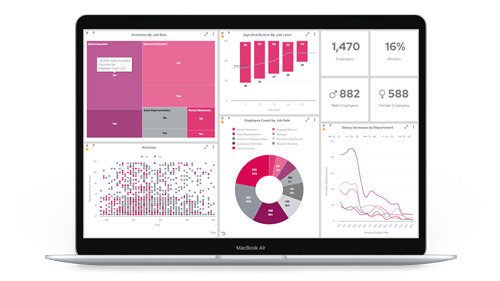
Real time supervision requires real time evidence, and this is precisely where Panintelligence provides measurable value. Panintelligence consolidates product, risk, and operational data into a single governed analytics layer that can be accessed instantly. Instead of manually constructing submissions, firms can produce live dashboards that demonstrate outcomes as they occur. Panintelligence embeds explainable AI so that every model decision includes documented rationale, version control, and transparency. It generates automated audit trails, records data lineage, and ensures that every compliance indicator is traceable from source to report. This allows firms to show supervisors not only what happened but why. Because Panintelligence integrates directly into existing infrastructure, firms do not need to rip out or replace legacy systems to achieve real time oversight. They can create a unified compliance environment that continuously reflects the state of their organisation. This reduces cost, increases reliability, and positions the firm to meet supervisory expectations with confidence.
The Commercial Advantage of Real-Time Supervision Readiness
Real time supervision is often viewed as a regulatory burden, but it offers powerful commercial benefits. Firms that operate with real time oversight gain earlier visibility of performance issues, customer risks, and operational failures. They respond faster to market changes. They build trust with customers who expect transparency and fairness. They reduce their cost to serve through automation and data reuse. PwC’s research on banking model transformation, capital markets/insights/reinvention of retail banking focused business models unlock value.html, highlights that firms adopting real time analytics frameworks lower operational risk and increase resilience. Real time compliance is therefore not only a defensive necessity but a driver of competitive advantage.
The Cultural Shift Required Inside Firms
Real time supervision cannot be met by technology alone. It requires a cultural shift in how banks define accountability, manage data, and interpret compliance. Data quality must be owned at source rather than outsourced to compliance teams. Model governance must be continuous rather than periodic. Senior leaders must demand live evidence rather than accepting retrospective reporting packs that mask operational issues. These changes are uncomfortable, but they are unavoidable. The institutions that embrace them will thrive. The institutions that resist will find themselves facing regulatory strain and operational fragility.
Conclusion: Real-Time Supervision Is Not Coming, It Has Already Started
The FCA has moved decisively towards continuous, data driven oversight. Firms that prepare now will improve resilience, reduce cost, strengthen governance, and build trust. Firms that delay will experience supervision as a constant source of pressure rather than a partnership. Real time supervision rewards clarity, transparency, and discipline. Panintelligence gives regulated firms the tools, governance, and visibility to operate in this new environment with confidence. The future of compliance is continuous. The question for every firm is whether they intend to lead in that future or be led into it.